More Kujundzic Scuplture...In December of 2018 I posted a brief entry on the ceramic work of Zeljko Kujundzic. For me, his sculptural work best exemplifies his talent. So here are a few more examples of his work for people to enjoy. 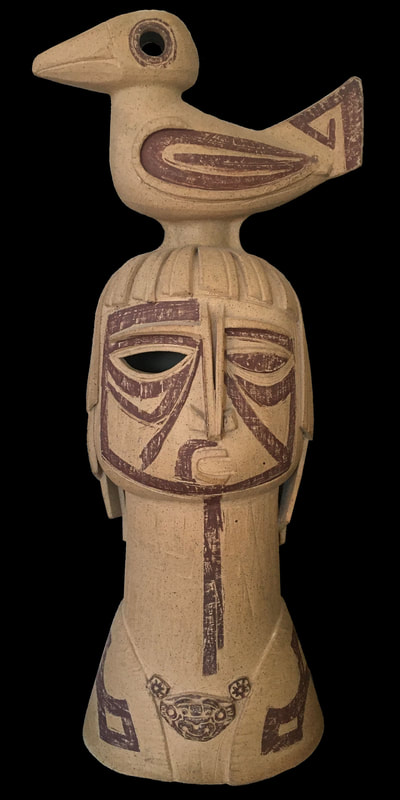 This piece is called "Birdwatcher" Its stands 29" tall and was featured in the 1980 Retrospective exhibit by the British Columbia Potter's Guild.
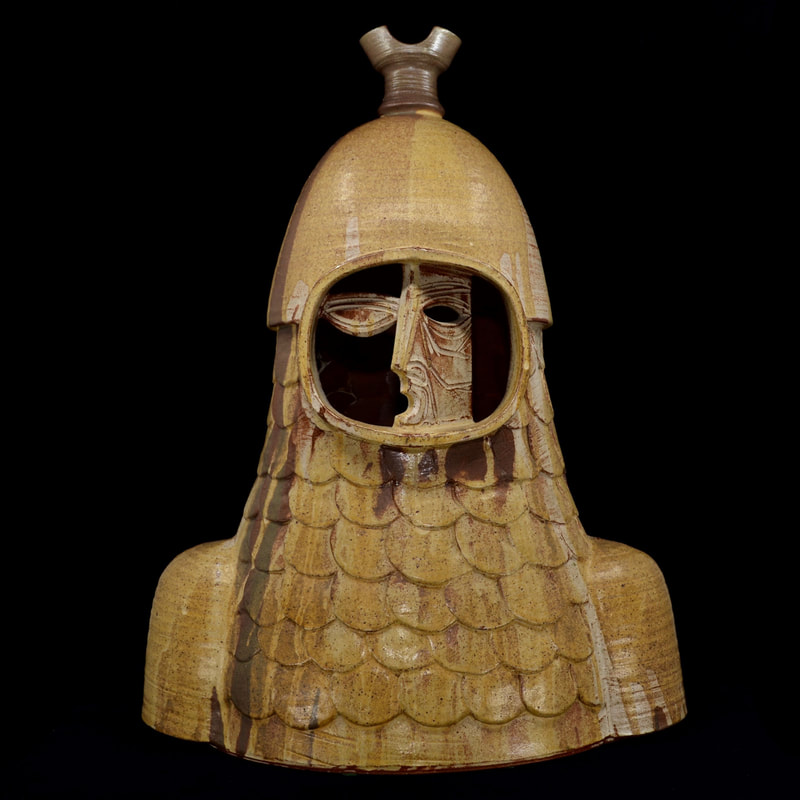
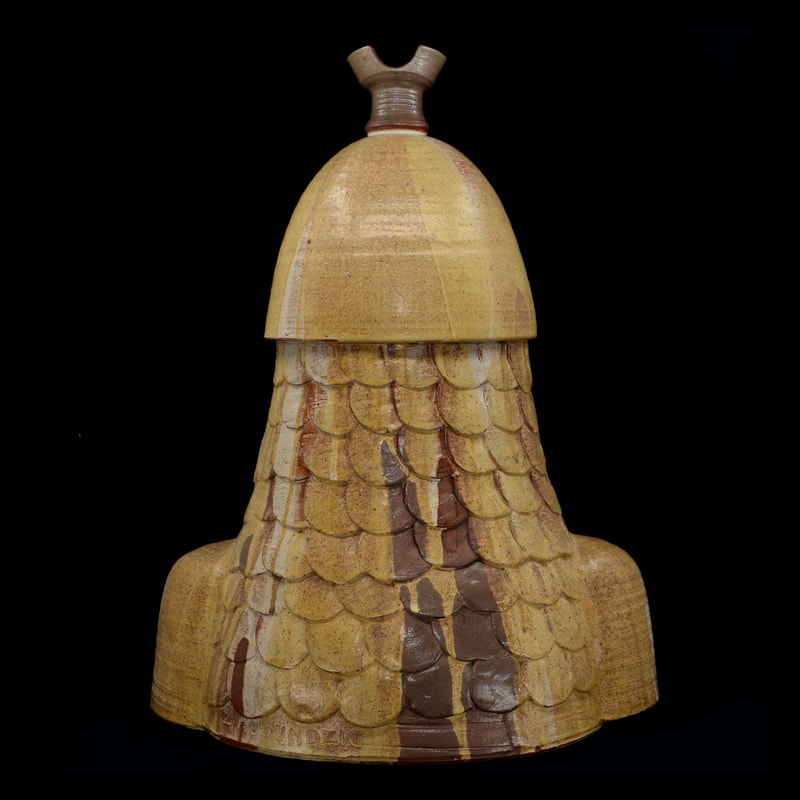
This piece is called "Knight." At 21" tall it is a large impressive piece that includes many of Zeljko's signature hallmarks. The face is set in the head at 45˚ angles so it appears to have a different expression depending on which way it is viewed. 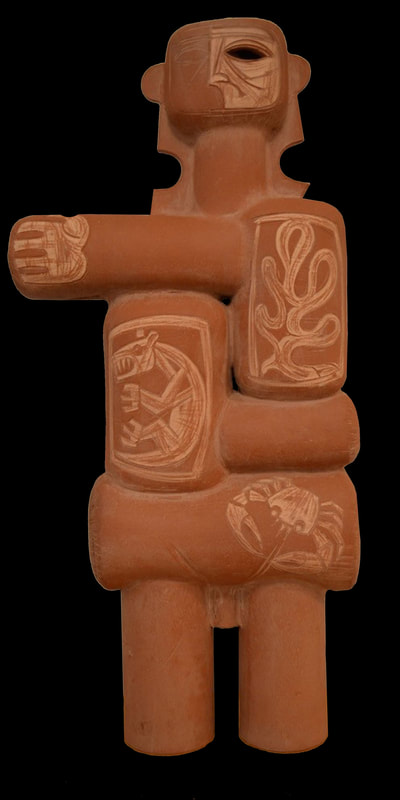 "Undersea Hunter" is one of the largest ceramic sculpture pieces Zeljko created. Standing 35" tall, it was exhibited at Expo 86 in Vancouver.
For a more in depth look at his art and career visit www.torncanvas.ca. If you have a piece of Kujundzic art or sculpture you wish to sell, please contact me here. If I could keep the work of only one potter, it would be examples by Wayne Ngan. To me, his work exemplifies everything a good piece of art should have; superior craftmanship, exceptional aesthetic, a solid pedigree, and wide acknowledgement of skill. Ngan’s pottery has all of these - the hand of a master is evident in all his work.
Wayne Ngan is a B.C. based potter who was born in Canton China in 1937. He immigrated to Canada in 1951 and by the late 1950s he was officially studying pottery at the Vancouver School of Art where he graduated with honours. It wasn’t long before he was recognized as a special talent and rewarded for his outstanding work. In 1983, he was awarded the Saidye Bronfman Award which “recognizes the exceptional work of individuals who have also made significant contributions to the development of the fine crafts in Canada.” Establishing his pottery on Hornby Island in British Columbia, Ngan worked as a production potter for most of his life and studied deeply to perfect his craft. This was done through his total devotion to his art - including several trips abroad to study in Japan and China, and through intense study of Asian pottery through books and museums. He even built a Sung Dynasty kiln funded by a Canada Council Grant he recited in 1984. 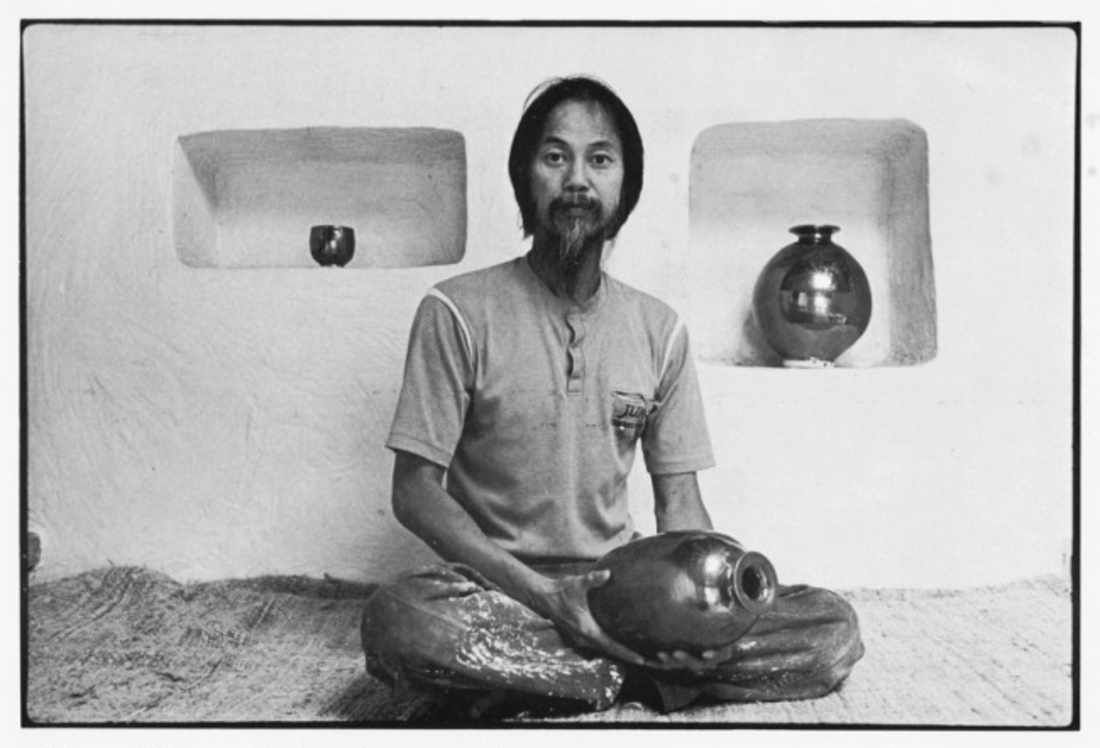 Wayne Ngan circa 1983. (Photo by Robert Minden, courtesy of waynengan.com). One potter Ngan studied most closely identified with was Shoji Hamada. Hamada was a Japanese potter who received the title of Living National Treasure in Japan, in 1955, bestowed only on those artisans who have attained such a high level of mastery in their craft they were designated as the keepers of “important intangible cultural properties."
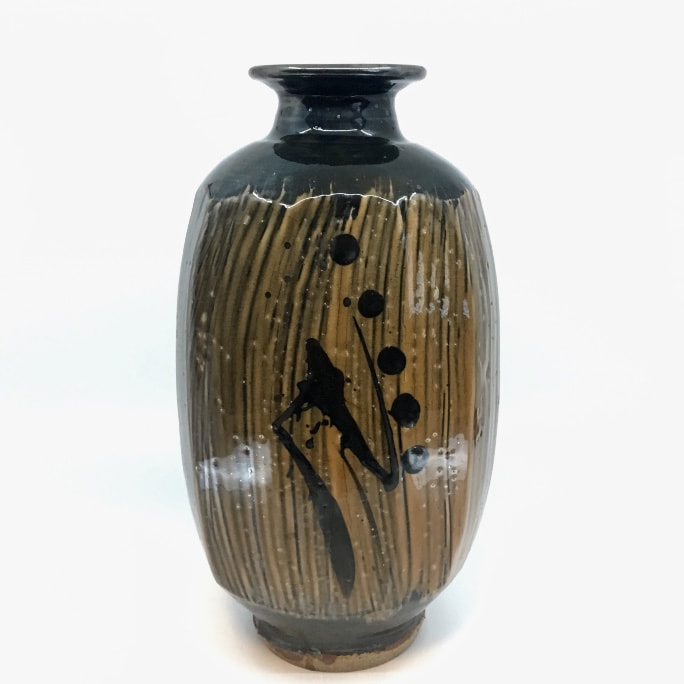
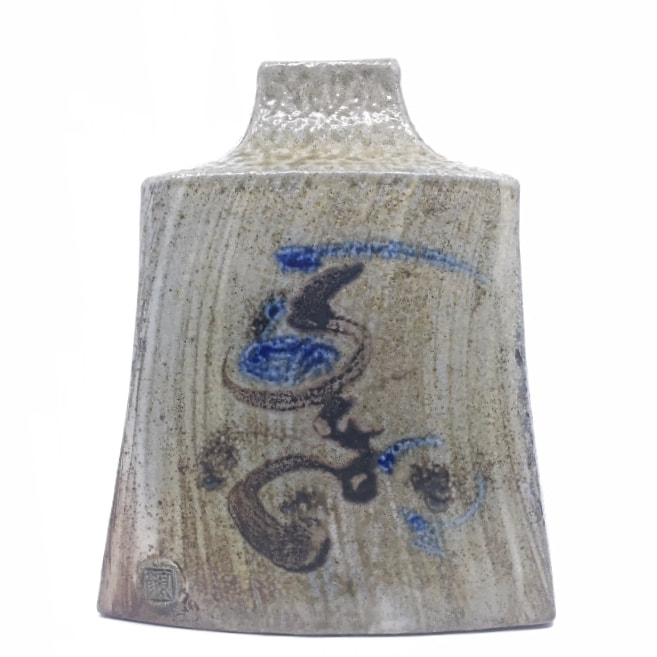
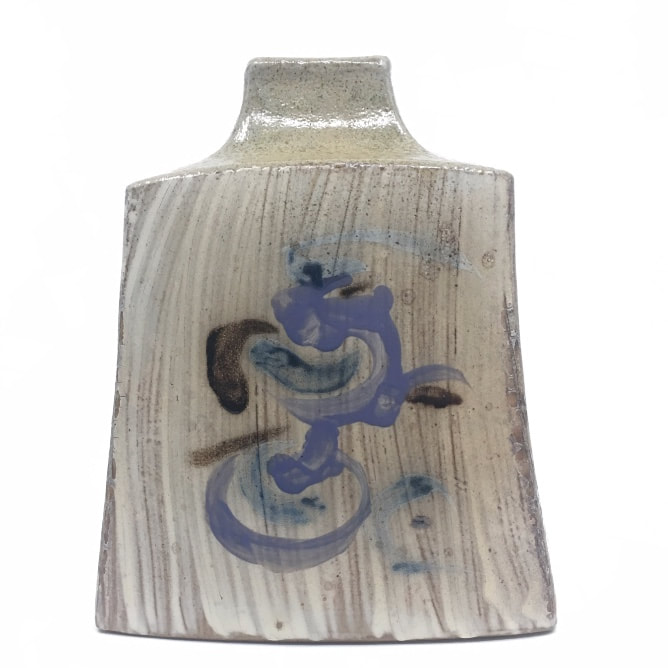
Hamada was a hugely influential figure in British Columbia pottery (which is an interesting story for another post), and although the two never met, Ngan often referred to him as “Shoji” as if the two were friends. Ngan studied the forms of Hamada pots and worked repeatedly to reproduce them to his satisfaction. He developed his own clays and glazes and decorated them with flourishes that are uniquely his, developing a style that is distinct among Canadian potters. The "Hamada-style" square bottle shown above is a good example of this.
Wayne Ngan’s body of work is impressive and his style is unmistakeable. His art perfectly captures the spirit of the Leach/Hamada tradition in BC yet his pottery is undeniably his. He has attained the highest level of mastery in the craft and his place in Canadian ceramics is unquestioned. It wouldn’t be a stretch to consider him Canada’s Shoji Hamada.
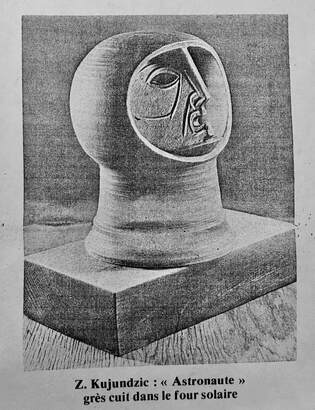
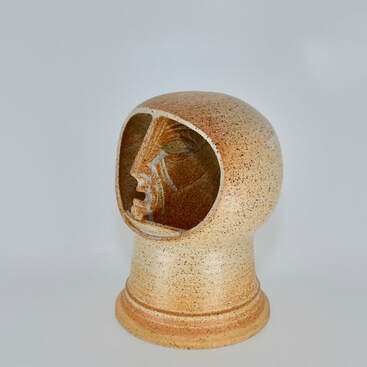
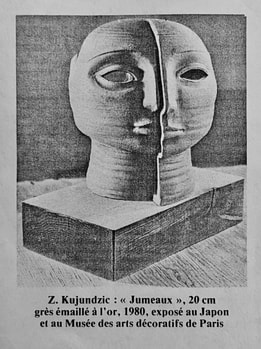
I appreciate that there are, and have been, many fine potters that our country has produced - too many to name and several of whom I have pieces by and enjoy very much. Wayne Ngan's work stands at the pinnacle for me. His total commitment to his work, the consistent excellence of the work he produced and the sheer variety of form and glaze make it so very enjoyable. Thankfully he was a prolific artist and numerous examples of his work are out there to be enjoyed. For more information on Wayne Ngan, visit his website here. If you have one or more pieces of Wayne Ngan's work you will to sell please contact me here. I made an interesting discovery this month. For years I’ve been interested in the work of Zeljko Kujundzic. I’ve tracked down and written about his paintings, ceramics, metal sculpture, etc. Through the course of my research I have also corresponded with his surviving family members. Earlier this month I took a drive and met one of his daughters. She graciously invited me in and answered all of my questions about her father, his career, his various commissions and showed me some of the works she possesses. During our visit she produced a container of his old files - ephemera made of newspaper clippings, pamphlets, magazines, exhibit catalogues and the like. She offered for me to take a look through it which I was pleased to do. While flipping through a 1982 copy of La Ceramique Moderne, a French language publication he occasionally wrote for, I came across an article he wrote about his experiences constructing a functional solar kiln. As I browsed the article I was struck because it featured one of the pieces in my ceramic collection. One of my favourite small sculptural pieces I now learned was entitled “Astronaut.” I was pleased to see it there and even happier to know what he called it. (Kujundzic almost always named his sculptural pieces).
After translating the article I learned about his various prototypes and experiences constructing his kiln. At the outset in 1971, he made it clear his mission was born out of environmental concern. He saw it as a necessary undertaking to contribute to the health of the planet. Working with the support of the University of Pennsylvania and lens manufacturers, he eventually came to use a large acrylic lens filled with white wine which could generate heat in a chamber up to 1400º C in 5 minutes! Once fully translated, it turned out to be a mostly technical article detailing the iterative process he went through to successfully kiln fire using only solar energy. What interested me most though was his reference to the little sculpture I have… He indicated that “Astronaut,” at 18 cm tall, a sandstone clay sculpture was one of the largest pieces he successfully fired in his solar oven. To evenly fire it he attached a barbecue rotisserie to the bottom of the chamber so it would slowly rotate while it vitrified.
This is precisely why I enjoy this hobby so much. The stories and history you can uncover is so fascinating! For more information on the life and work of Zeljko Kujundzic please visit www.torncanvas.ca
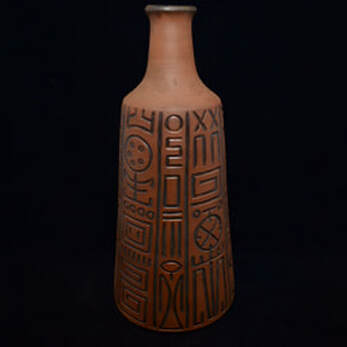
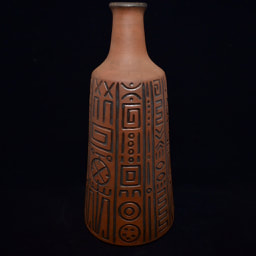
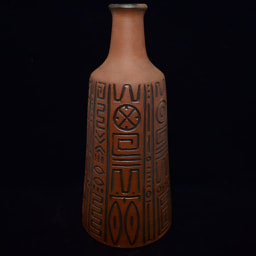
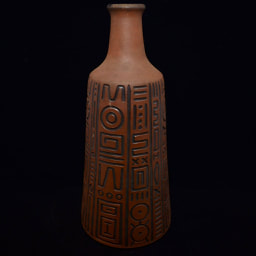
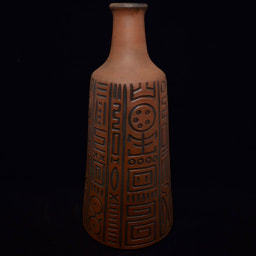
Jan and Helga Grove were prolific potters who's Canadian career began in 1965, when they arrived in Victoria from Germany via Turkey. Jan is certified master potter and the son of Gerd and Lu Grove, highly respected (and collected) potters from Lübeck Germany. Helga worked at the Villeroy and Boch factory in Lübeck in the 1940s, and also for the Groves where she met Jan. 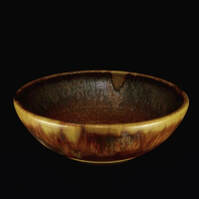 The majority of Grove pottery that is found is functional tableware - plates, bowls, goblets, etc. These forms were a staple at the Grove pottery through its entirety. They are primarily found in their signature brown or blue glaze (see photo at left for reference), but can also be found in the less common green. Vases can also be found with their more experimental glazes akin to the "fat lava" finishes found on popular West German pottery of the era. 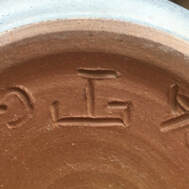 Most of these pieces were thrown and glazed by Jan as indicated by the mark on the back. Jan signs his work with the stylized JG (as shown right). Jan's work is exceptional - truly thrown by a master potter. His large bottles, vessels, and bowls are magnificent. Exceptionally well balanced and consistent, Jan's bowls ring like a bell when tapped with a fingernail. 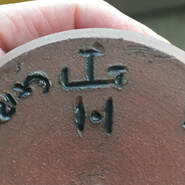 My favourite Grove pieces though are their collaborative designs - thrown by Jan and decorated by Helga. These are easiest to identify by looking underneath the piece. If it has Jan's "JG" and Helga's "H" (shown here), it is a piece worked on by husband and wife. Jan's consistent mastery of shape and form combined with Helga's eye for graphic design. Her education in this area includes a two year master class with Bauhaus professor Georg Muche. These collaborative pieces are easy to spot simply by the inclusion of graphic patterns. The platter shown below includes a motif the Groves used repeatedly. It can also be found in blue. The most common combination found are various cobalt graphics on a white background. 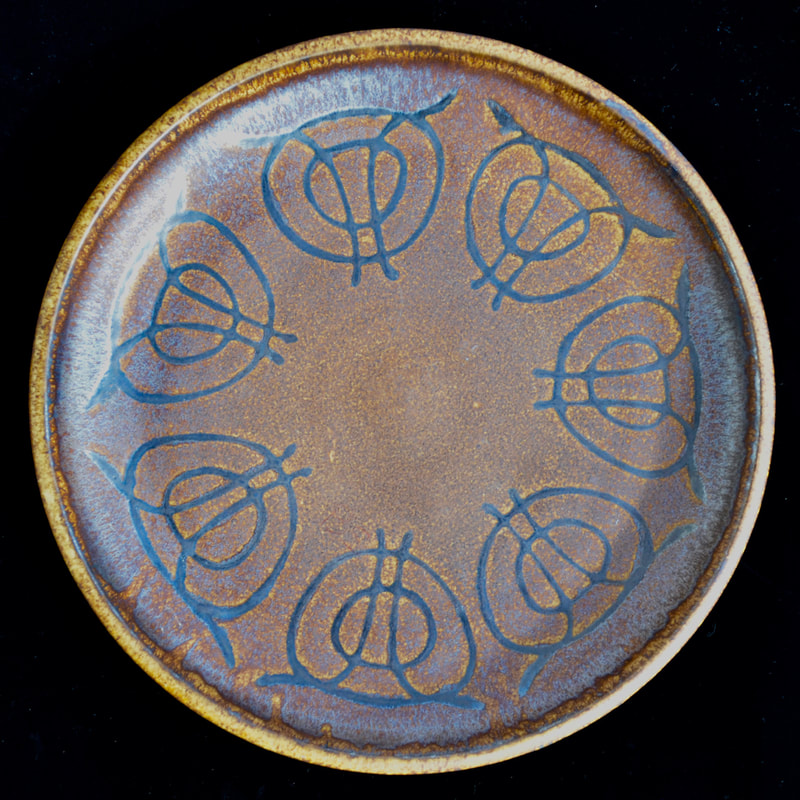 My favourite of all are the "hieroglyphic" pieces they made. These are the forms Jan would throw using their red clay, with Helga incising patterns, runes, or glyphs using a sgrafitto technique. The incisions would then be filled with black glaze to make them contrast nicely with the clay. Shown here are some examples of their work.
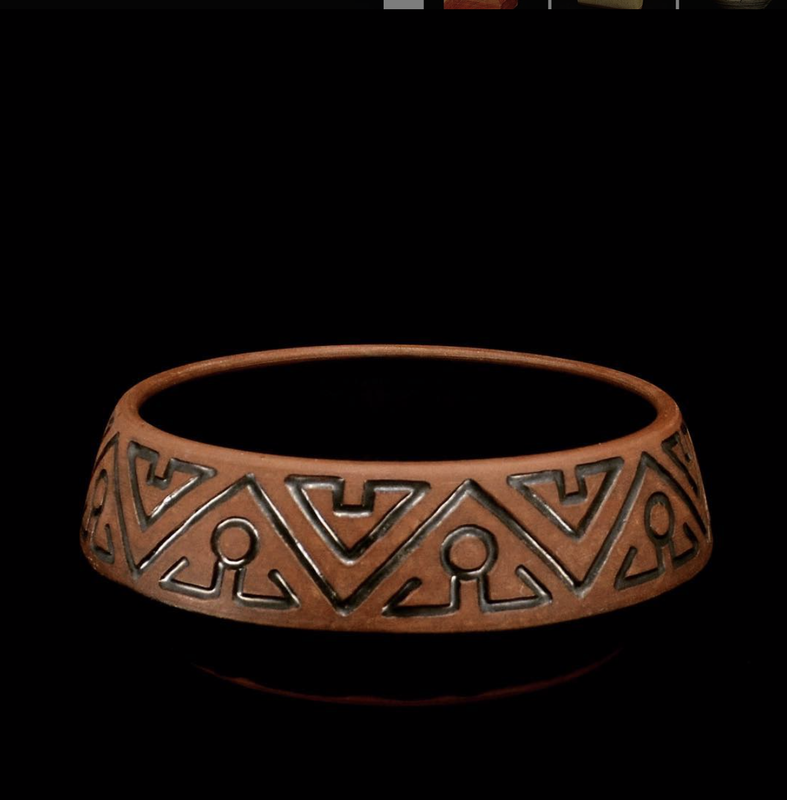 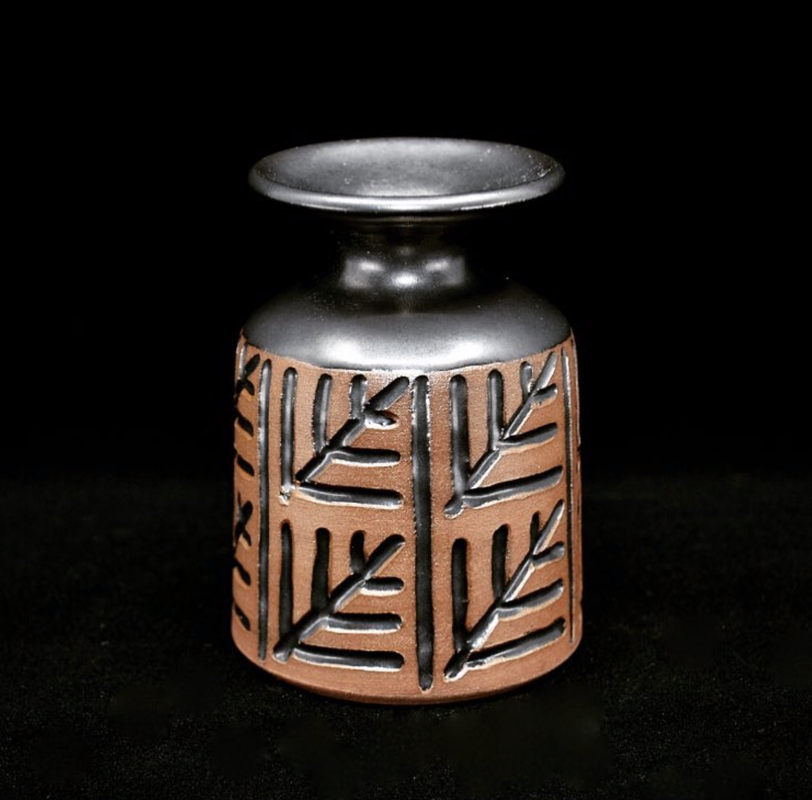 The Groves retired from production in 2009 and left a massive legacy of their work out in the world, currently enjoyed by users and collectors alike. If you have a piece of Grove pottery you would like to sell, please contact me here.
|
Studio Pottery CanadaPottery enthusiast learning about the history of this Canadian art form and curating samples from the best in the field pre-1980. Archives
March 2023
Categories |
 RSS Feed